Now, it’s looking more like late 2027, at the earliest, for Artemis III.
“I’ve received responses from both vendors, both SpaceX and Blue Origin, to meet our needs for a late 2027 rendezvous, docking, and test of the interoperability of both landers in advance of a landing attempt in 2028,” Isaacman said Monday.
Both companies have multibillion-dollar contracts to develop and deliver human-rated landers to NASA for use on Artemis missions. Both vehicles need to be refueled in space in order to fly to the Moon. This added complexity is not required for an Earth orbit mission.
“The taxpayers are making a very big investment to both SpaceX and Blue Origin’s Human Landing System (HLS) capability,” Isaacman said in a hearing before the subcommittee of the House Appropriations Committee responsible for NASA’s budget. “I would also appreciate that both those companies are investing well in excess of that, as well.”
Starship and Blue Moon are each significantly larger than the Apollo lunar lander, and could eventually be refueled at the Moon for multiple trips between the lunar surface and crew and cargo freighters in orbit.
“It’s that capability that allows us not just to get back to the Moon, but really build the Moon base, put lots of mass, sufficiently and affordably, on the surface, not to mention every other application that comes from a rocket that you don’t have to throw away,” Isaacman said. “So we’re very grateful for that.”
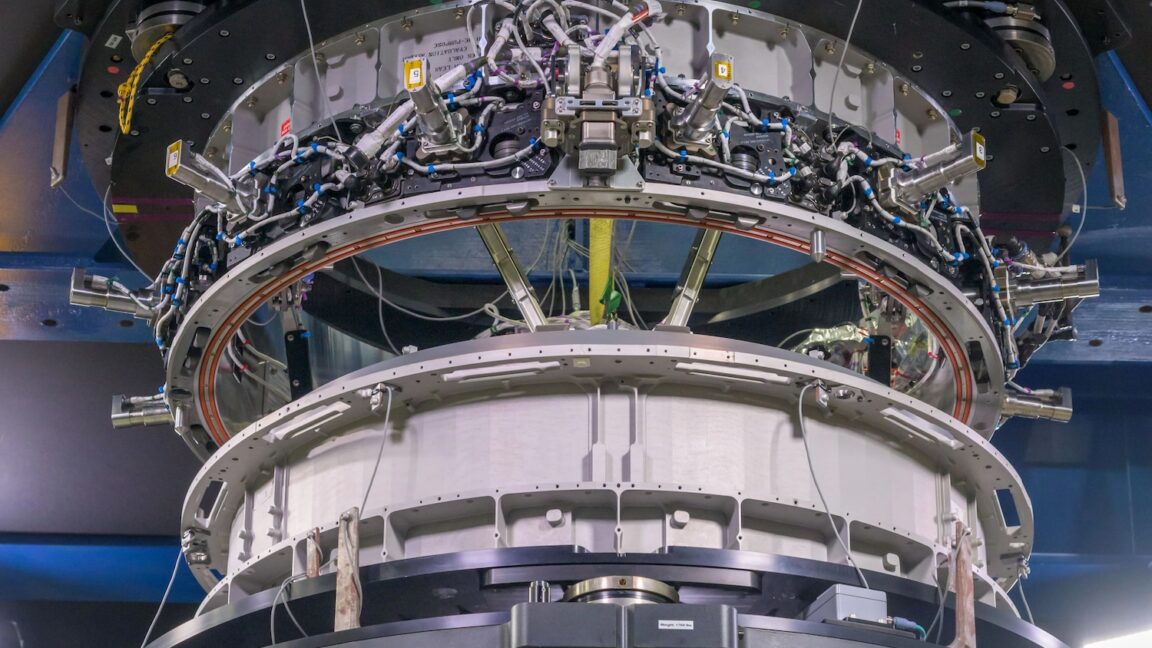
There are steep challenges in getting Starship and Blue Moon ready for a human spaceflight mission. On Apollo 9, two astronauts took the lunar module for a test run, separating from the command module with the mission’s third crew member for more than six hours before reconnecting in low-Earth orbit. For a similar test on Artemis III, Starship or Blue Moon would require an advanced, independent life support system, human-rated engines, a cockpit and flight controls, and a docking mechanism. SpaceX and Blue Origin have released few details of where those systems are in development and production.
Credit:
NASA/SpaceX
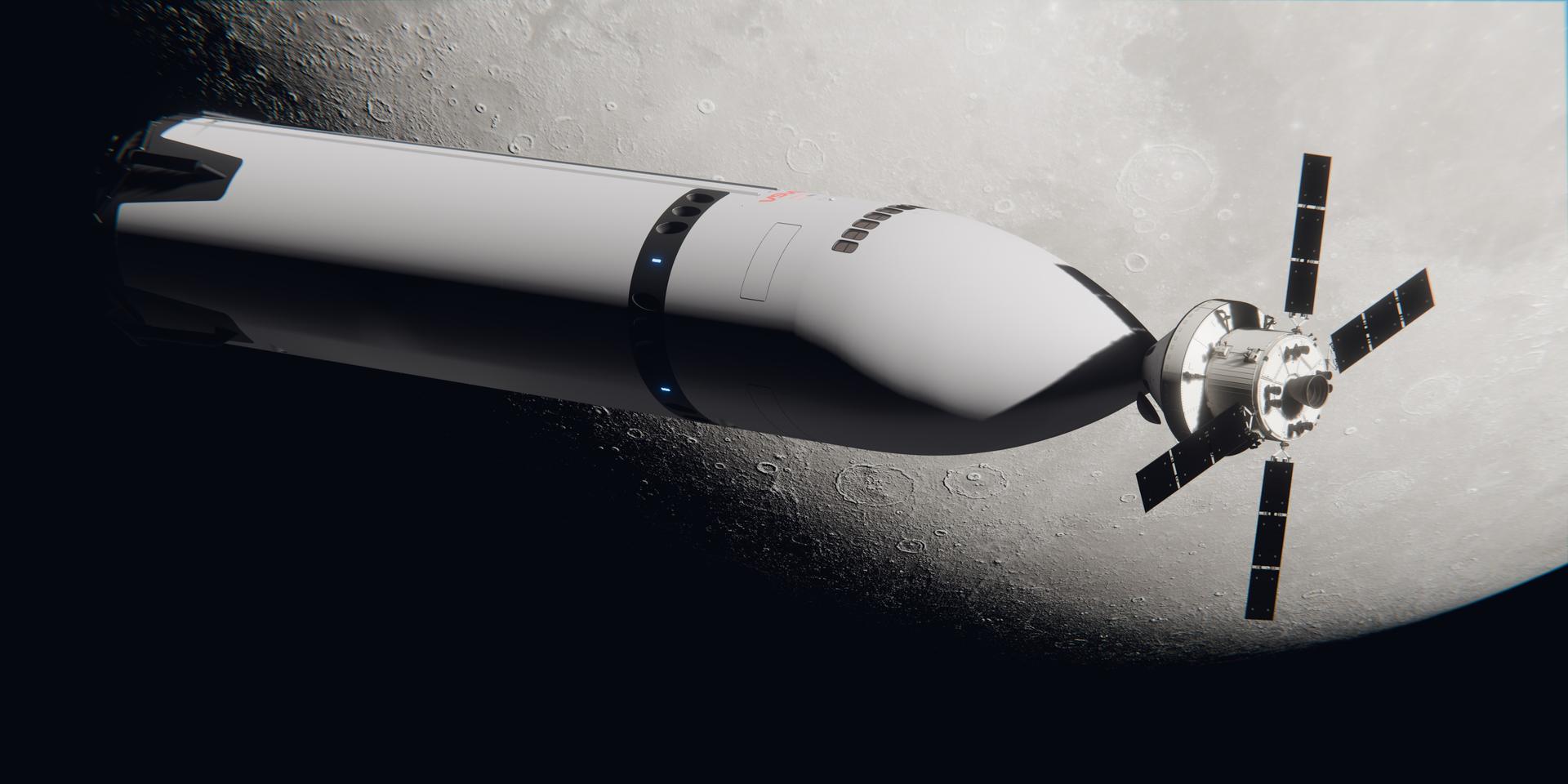
This artist’s rendering shows NASA’s Orion spacecraft docked with SpaceX’s Starship lunar lander near the Moon.
Credit:
NASA/SpaceX
It’s possible NASA could go for a less ambitious Artemis III mission, with a rendezvous and docking but no independent crewed flight of the lunar lander. NASA’s leaders must decide on these options in the coming months, and their thinking will be informed by how quickly and successfully SpaceX moves forward with flying the next-generation Starship Version 3 rocket and Blue Origin’s planned uncrewed landing near the Moon’s south pole with the Blue Moon cargo lander.