Credit:
Skyroot Aerospace
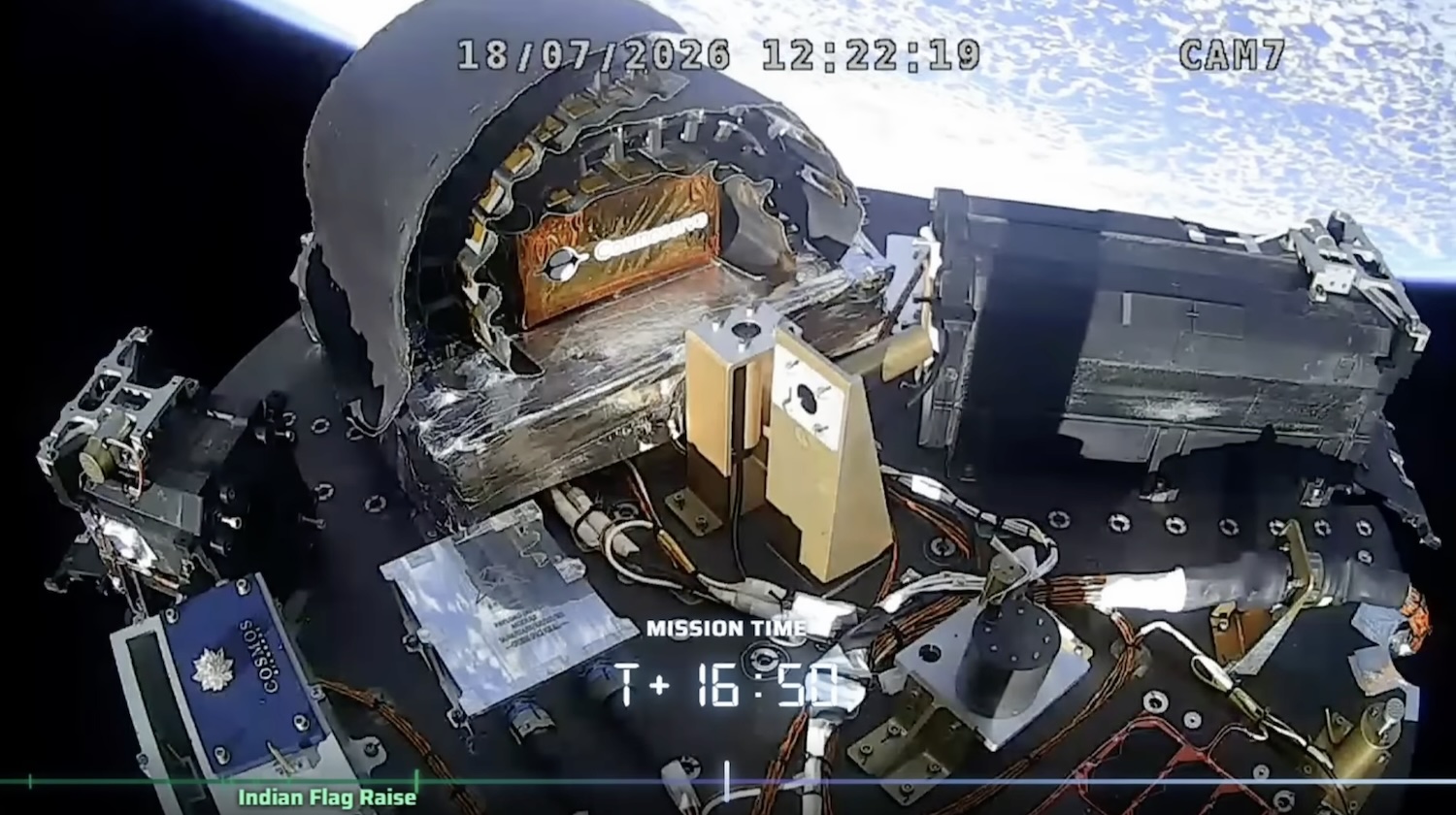
This view of the payload deck of the Vikram-1 rocket’s upper stage was captured moments after orbital insertion Saturday. The rocket deployed two small CubeSats and hosted several more payloads that remained attached to the upper stage.
Credit:
Skyroot Aerospace
Skyroot’s breakthrough launch comes as India’s government, led by Prime Minister Narendra Modi, seeks to supercharge the country’s space industry. India has long had a robust space program, with government-developed rockets such as the Polar Satellite Launch Vehicle and the larger LVM3 often attracting commercial customers from the United States and Europe. India became the fourth country to successfully land a spacecraft on the Moon in 2023, and is working on an oft-delayed human-rated crew capsule to fly astronauts to low-Earth orbit.
Modi has told the Indian space industry to increase its annual launch total from about five launches per year to 50 before the end of the decade. The prime minister called Chandana and congratulated the Skyroot team after Saturday’s launch.
“This is a defining moment in India’s space journey,” Modi said in a statement. “The growing participation of our private sector is opening new frontiers and accelerating innovation. This achievement will encourage countless youngsters to dream bigger and innovate fearlessly.”
Chandana, a former engineer at India’s space agency, founded Skyroot in 2018 with another ISRO scientist, Naga Bharath Daka. They decided to focus on developing a solid-fueled launcher first, optimizing for what Chandana described as the lowest development time and the lowest cost per launch. “We wanted to get to an orbital launch vehicle in a few years,” Chandana told Ars.
“It’s a test launch” he said at the time. “Statistically, the first launch from a private company almost always fails. It’s very difficult to succeed with all new systems. But I think we have done everything we can do to ensure the first launch goes well.”
Indeed, the first launch went very well, exceeding all expectations. A second Vikram-1 launch could happen before the end of the year, Chandana said.
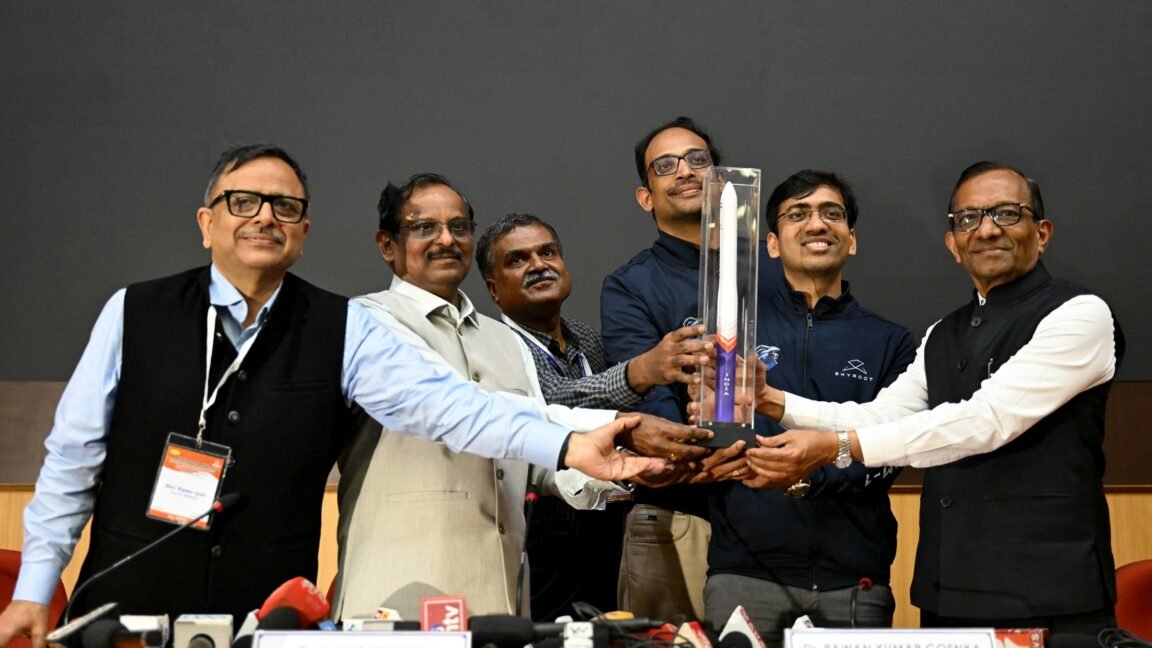
“This is a 100 percent designed in India rocket, a 100 percent made in India rocket, built by 100 percent Indian people, for India and for the world,” Chandana said after the launch Saturday. “This was a historic moment for India, but also a very proud moment for the global space sector because the world needs more access to space.”