
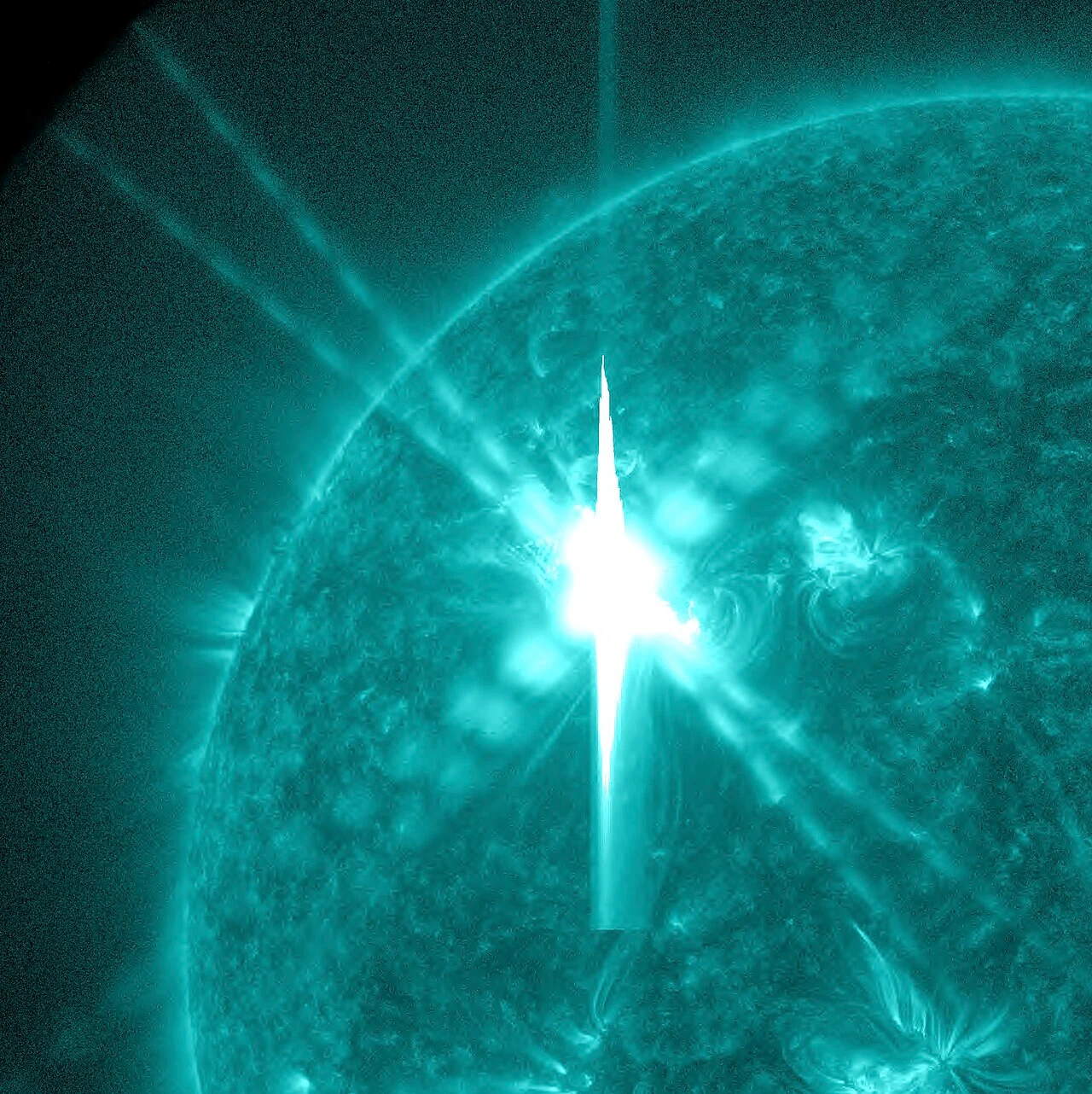
The Sun’s outer atmosphere is trying to kill us, not literally of course but the corona, that wispy halo of superheated gas extending millions of kilometres into space, is the birthplace of solar flares and the violent particle storms that follow. Understanding exactly how those eruptions work requires watching them in X-rays, and watching them in X-rays requires getting above Earth’s atmosphere, which absorbs them completely before they reach the ground. That’s a problem that has demanded increasingly clever solutions.
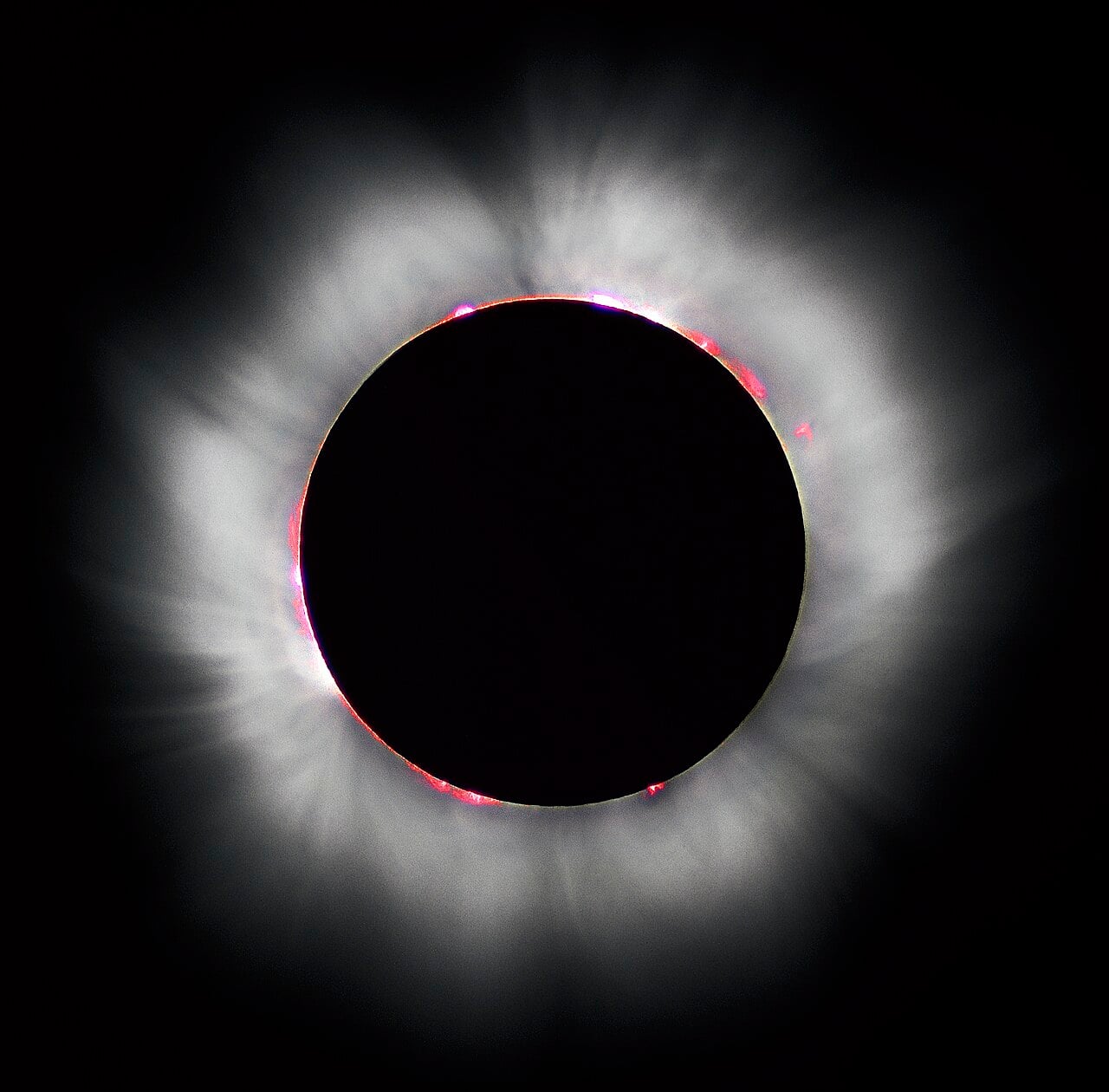 The Sun’s corona and prominences are visible in this image of a solar eclipse (Credit : Luc Viatour)
The latest comes from a collaboration between Nagoya University and Japan’s SPring-8 synchrotron radiation facility, an unlikely pairing perhaps but it’s produced a genuinely remarkable result. The team has built an X-ray telescope precise enough to distinguish an object just 3.5 millimetres wide from a kilometre away. It flew aboard the FOXSI-4 sounding rocket launched from Alaska in April 2024, becoming the first domestically developed Japanese high resolution X-ray telescope to fly on an international mission and during its brief window above the atmosphere it caught a solar flare in progress.
The key to its performance lies in how the mirror was made. Most X-ray telescope mirrors are built from multiple segments assembled together, which introduces alignment problems where every joint is a potential source of error. Instead, this mirror was cast as a single continuous nickel shell, just 60 millimetres across and 200 millimetres tall, with no seams to shift or surfaces to fall out of alignment. The shape is carefully engineered with a parabolic upper section paired with a hyperbolic lower section allowing X-rays to reflect twice before landing precisely on the detector.
Getting the mirror right in the first place required borrowing techniques from synchrotron science, where extreme precision in mirror surfaces is routine. That crossover of disciplines is central to what makes this work significant, neither field could have achieved it alone.
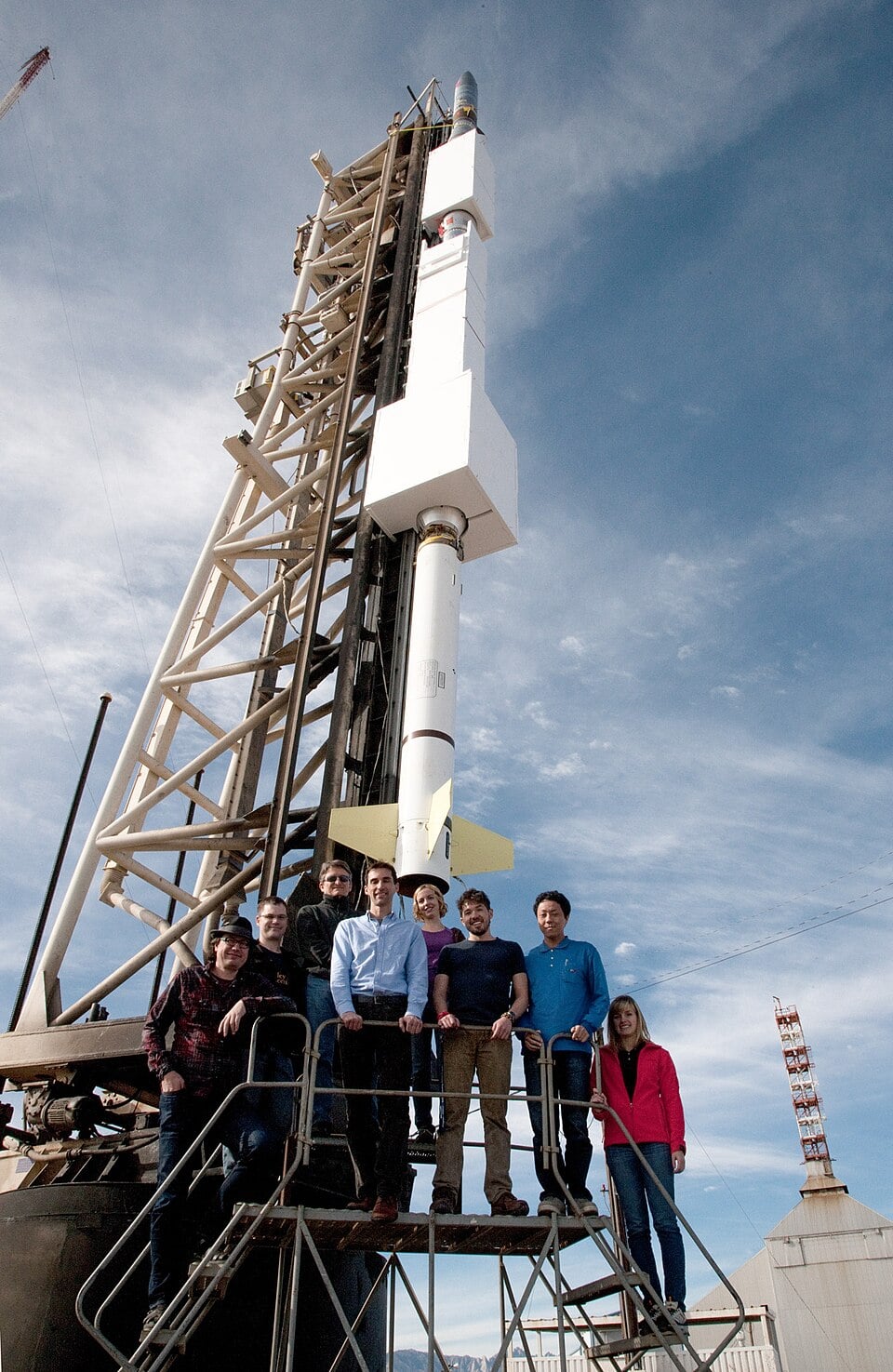 A photograph of the FOXSI team in front of a FOXSI sounding rocket on the launch pad (Credit : US Federal Government)
Before launch, the team also had to solve a testing problem. Starlight arrives as effectively parallel rays, but recreating that on the ground at short distances is notoriously difficult. They built an innovative new system at SPring-8, using an X-ray source just 10 micrometres across (roughly a tenth the width of a human hair) placed 900 metres from the mirror. At that distance the rays stayed sufficiently parallel to closely mimic light arriving from a real star, allowing them to characterise the telescope’s sharpness before it ever left Earth. In doing so they identified that the main factor limiting further improvement was tiny longitudinal imperfections along the mirror surface.
An upgraded version is already planned for the FOXSI-5 mission later this year and beyond that, the team’s ambition is to miniaturise the technology into CubeSats. High-resolution X-ray optics have never flown on platforms so small. If they succeed, precision X-ray astronomy could become dramatically more accessible, opening the field to researchers who currently can’t afford a dedicated mission.
Source : Japan delivers its sharpest X-ray telescope for the FOXSI mission